

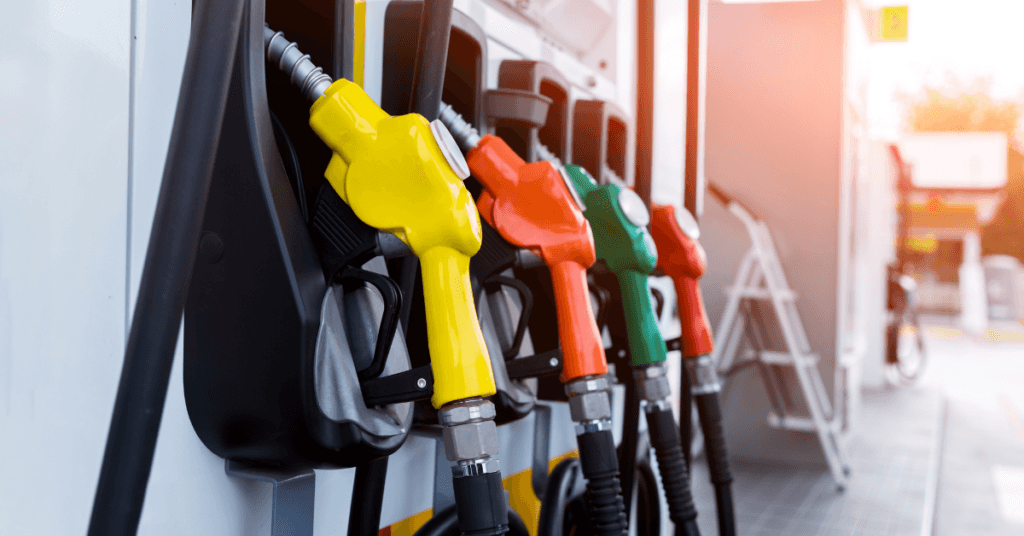
Until recently, when we thought about motor vehicle fuels, we thought simply in terms of gasoline or diesel fuel. These fuels were derived from crude oil and are currently used worldwide. Recently things have become more complicated with the introduction of several alternative fuels.
This is one of a series of articles on alternate sources of energy for transportation. Its purpose is to condense information on this topic for the fleet manager and general user.
We often now come upon other fuel descriptions such as biodiesel, renewable diesel, petrodiesel, ethanol, methanol, hydrogen, and even ammonia. Not to mention blends of some of these fuels. Let’s go over the differences.
The purpose of fuels is to conveniently store energy in a chemical form until we want to convert it to electrical, mechanical, heat energy. Mostly the energy in fuels is stored in hydrogen bonds, either bonds to carbon, oxygen, nitrogen, or another hydrogen atom. The reactions which release the energy usually combine the components with oxygen from the air to form water and sometimes other undesirable by-products such as carbon monoxide, carbon dioxide, and
nitrogen oxides.
Making the fuel chemicals takes more energy than we get back. Luckily, we have an abundant energy source in the sun. Furthermore, nature has provided photosynthesis as a means of capturing that energy for later use. Solar energy captured by plants eons ago was stored by geological forces as coal, petroleum, and natural gas. As we use that fossil energy the carbon dioxide created enters the atmosphere and creates undesirable effects (i.e., global warming).
Vegetation that is currently growing gets its carbon by removing it from the air. Fuel made by harvesting this carbon source is recycled and does not contribute to a net increase in atmospheric carbon dioxide.
Petroleum, in all its forms, is not equally distributed around the globe and has varying degrees of accessibility. Its composition is also highly variable. To recover, transport, and convert it into a fuel that we prefer requires considerable energy use. The composition of the end products of refining and using fossil fuels include a large portion of toxic chemicals which also contribute to air pollution, health, and economic detriments.
Currently grown and harvested vegetation on the other hand can be chosen to have the most desirable chemical characteristics and the least variability. Conversion to usable fuel is less energy intensive. The composition of the end products of bio-based fuels can be of low toxicity and have low air pollution detriments.
The following is a list of fuels being used in transportation and their characteristics with respect to usability and renewability.
Petroleum Gasoline
Advantages: Readily available; mature production and distribution chain; lots of experience making and using it.
Problems: Contains over 200 types of molecules that are highly variable depending on source material and refining processes used; subject to premature ignition (i.e., knock) in internal combustion engines; contains aromatic hydrocarbons (BTEX) which have significant toxicity; readily usable in commercially available spark ignition engines.
Ethanol
Advantages: Can be obtained by fermentation of starch from many types of cultivated plants; established production and distribution chain in the US and some other countries; over 30 years of experience in the US as E-10 (ten percent in petroleum gasoline); Brazil has used up to 100 percent with a current minimum blend requirement of 27 percent in petroleum gasoline; in pure form has an octane rating of 110 so it can be used to increase the octane rating (preventing knock) of a blend with petroleum gasoline; does not contain or result in aromatics when used; reduces airborne particulates when pure or in blends; usable in most spark ignition engines at lower blend rates (< 25%) with flex fuel vehicles able to use up to 100 percent (85% of new Brazilian vehicles are flex fuel); low toxicity.
Problems: Slightly lower mpg (average about three percent) depending on engine design; availability less the farther away from production
facilities; perceived competition with food crops (actually, only the starch portion is used with the proteins and fats remaining in the food chain).
Methanol
Advantages: Can be obtained from plants (although currently most is made from natural gas); internal combustion engines can be adapted to use it; combustion products contain no aromatics or particulates.
Problems: Much more toxic than ethanol; somewhat corrosive to internal combustion engine parts; production and distribution not widespread; lack of experience with widespread use.
Hydrogen
Advantages: Contains no carbon so it creates no carbon dioxide; can be used in specially designed internal combustion engines or in fuel cells to make electricity (think fuel cell electric vehicles); the only by-product from combustion is pure water; can be renewably produced by electrolysis of water using electricity from solar cells, wind generators, or nuclear power; energy density better than current lithium vehicle batteries.
Problems: Most fuel hydrogen and that for industrial uses is currently produced from non-renewable natural gas; production and distribution is currently very limited; has low energy density (needs three times the volume needed by gasoline to store comparable energy).
Ammonia
Advantages: Contains no carbon; high energy density makes it good storage molecule for hydrogen (ammonia is one nitrogen atom and three hydrogen atoms); can potentially be produced from renewable hydrogen and nitrogen from the air.
Problems: It is a fairly toxic gas and only seriously being considered as a fuel for ocean-going ships; currently produced from natural gas (non-renewable).
Petroleum Diesel
Advantages: Readily available; mature production and distribution chain; lots of experience making and using it; readily usable in commercially available compression ignition (diesel) engines.
Problems: Contains over 500 types of hydrocarbon molecules that are highly variable depending on source material and refining processes used; contains aromatic and polyaromatic hydrocarbons (PNAs or PAHs) which have significant toxicity (some are carcinogenic); additives usually need to be used to improve lubricity.
Biodiesel (Also Known as FAME, Fatty Acid Methyl Esters)
Advantages: Produced from vegetable oil, waste cooking oil, animal fats and either methanol or ethanol; three demonstrated production methods (acid catalyst, base catalyst, or supercritical conditions); not as energy or capital intensive as petroleum diesel or renewable diesel; has high lubricity (reduced wear on metal engine components); low toxicity and reduced particulate emissions; does not contain toxic aromatics or polynuclear aromatics (PNAs or PAHs).
Problems: Changes from liquid to solid (crystalizes) at 20-30 degrees F (indicated by cloud point temperature) which
affects fuel flow.
Renewable Diesel (Hydrogenated Vegetable Oil, Used Cooking Oil, or Animal Fats)
Advantages: Produced from vegetable oil, waste cooking oil, animal fats and hydrogen; there are at least six demonstrated production methods; production can be done using traditional petroleum refining technology that is well optimized, meets the same specifications as petroleum diesel including cloud point; composition does not include any significant amount of aromatics or PNAs; readily usable in commercially available compression ignition (diesel) engines.
Problems: The hydrogen used is currently not bio-based but produced from natural gas; more energy and capital intensive than biodiesel.
Alternative fuel choices and availability are changing frequently. Stay tuned for updates.

James “Jim” O’Brien was elected to the IACT board in 2026 and serves as Treasurer. With degrees in chemistry and business administration, he brings extensive expertise in fuel chemistry, chemical safety, hazard assessment, and emergency management. After 20 years with the Illinois EPA leading emergency response, prevention, occupational safety, and toxics risk assessment efforts, he became an environmental consultant.