


Hello Readers,
I am James Patrick O’Brien and was recently elected to the IACT Board. I am honored by this opportunity and look forward to working with you as we continue advancing IACT’s vision.
My background is in chemical safety, hazard assessment, and emergency management, with an emphasis on fuel chemistry. I worked for the Illinois EPA for about twenty years, and as an environmental consultant until just recently. My interest in transportation energy started because the components of a fuel determine how easy or difficult it is to clean up spills, as well as the short- and long-term hazards posed by fuel contaminants, whether in the air, soil, or water. Also, the chemical and physical properties of fuel components determine how efficient and practical a particular fuel is in its intended use to provide power.
However, I’ll spare you a deep chemistry lesson today. In this article, I would like to present a background on diesel engine technology and current innovations that are likely to have a significant influence on cleaning up transportation emissions.
How does a diesel engine work?
A diesel engine is an internal combustion engine that generates power through compression ignition. Unlike gasoline engines that use spark plugs, diesel engines compress ambient air until it gets extremely hot, then inject fuel directly into the hot air so it ignites automatically. Diesel engines do not have an electrical ignition system, which makes them highly reliable in damp environments like ships. Instead, they use glow plugs to warm up cold cylinders before the engine starts. Fuel is sprayed directly into the combustion chamber (often recessed into the piston itself), rather than mixing with air beforehand.
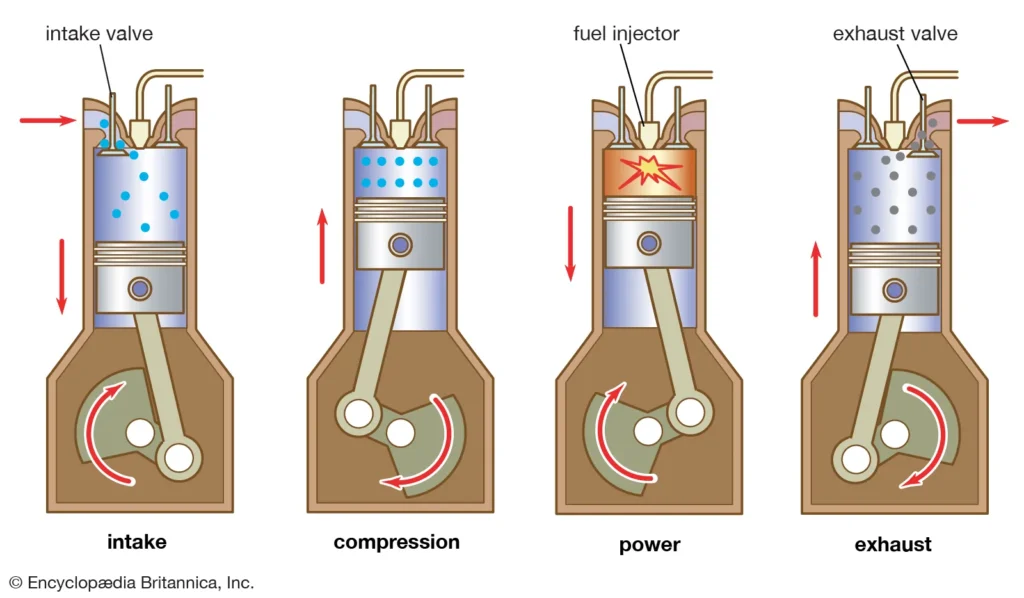
An advantage of this engine design is high thermal efficiency. Diesels extract more energy from their fuel—getting around 40% efficiency compared to the 25% of a typical gasoline engine. Diesel fuel is denser and contains more energy per gallon than gasoline, resulting in better mileage.
Traditional petroleum diesel fuel is produced from crude oil and contains straight and branched chain hydrocarbons (more specifically, satured hydrocarbons, or alkanes). It also contains more toxic and polluting polycyclic aromatic hydrocarbons (PAHs or PNAs). Biofuels produced from vegetable oils or animal fats don’t contain the PAHs and some can be used as a direct replacement for petroleum fuel in existing engines. This allows for massive carbon footprint reductions and cleaner air from our existing fleets without altering traditional mechanical reliability.
Recent innovations in diesel engine design
Recent innovations in diesel engine design focus on maximizing thermal efficiency, adapting to zero-carbon fuels, and integrating digital intelligence to meet low emissions targets. Driven by upcoming standards like the 2027 EPA and Euro VII rules, major manufacturers are proving that internal combustion technology can still be improved significantly.
Some companies are developing fuel-agnostic engines where the lower blocks remain identical, but the top cylinder heads can switch between diesel, natural gas, and hydrogen internal combustion. This allows heavy vehicles to run on lower carbon fuels or zero-carbon hydrogen while utilizing existing manufacturing architectures. Other efforts include adapting diesel engines to run purely on ethanol. To do this, the combustion temperature is raised inside the cylinder. This allows the engine to keep the same high power and torque as a traditional diesel, but with much lower pollution.
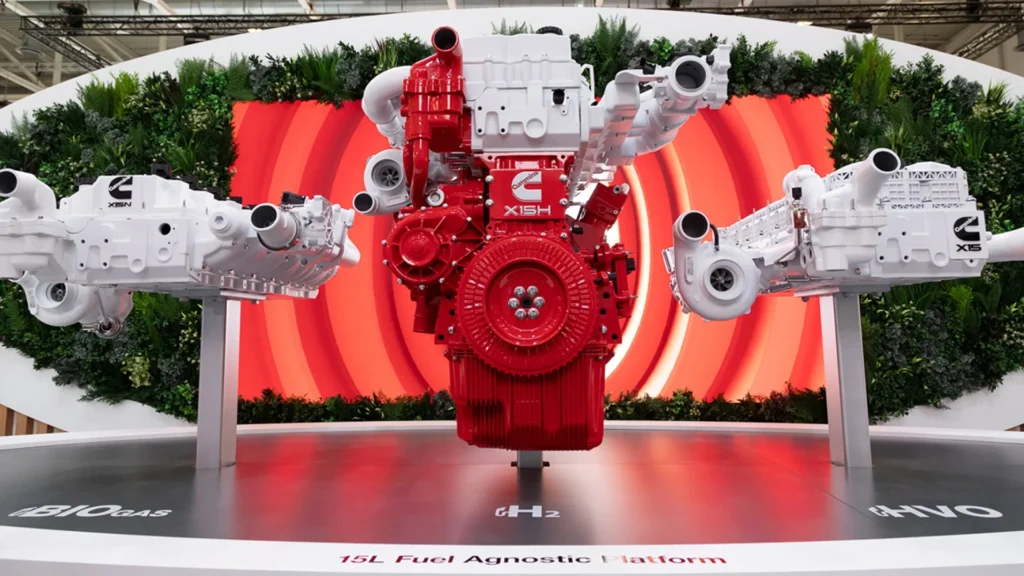
Image source: Cummins Inc
Recently design innovations have resulted in better thermal efficiency in commercial models. This was achieved by redesigning combustion chambers to optimize fuel-air mixing and reducing heat loss. Advanced ultra-high-pressure common rail injection systems now leverage highly responsive piezoelectric injectors. They perform multiple, micro-targeted fuel squirts per individual combustion stroke, reducing noise, maximizing energy output, and minimizing soot formation. Additionally, engine internals now feature specialized diamond-like hardened carbon coatings on pistons, bearings, and crankshafts. This significantly minimizes friction losses and modulates the intense thermal loads of modern downsized engines.
Diesel-electric hybrids are another coming innovation. Integration of 48V mild-hybrid and full hybrid architectures is rapidly expanding in commercial trucking. The electric motors recapture kinetic energy during braking to assist the diesel block during high- load acceleration, cutting low-end fuel consumption.
How diesel vehicles are evolving beyond engine technology
In light vehicles, brands like Mazda have focused on right-sizing clean diesel engines, maintaining relatively larger displacements but utilizing sophisticated lean-burn technologies to deliver V8-level torque with minimal fuel draw.
The use of engines in traffic is also being optimized. Heavy-duty powertrains now communicate via cloud software platforms. These systems utilize cameras, GPS topography maps, and live traffic data to proactively manage gear shifting, torque delivery, and engine load before the vehicle hits an upcoming hill or traffic jam. Fleet operators can now deploy remote software changes. This safely modifies engine computing parameters automatically based on changing high-altitude terrains or heavy towing duty cycles.
Obviously, there is a great deal to look forward to with respect to diesel engines and cleaner transportation. Thank you for being part of IACT’s work and for the many ways you support cleaner, smarter transportation choices across Illinois.

James “Jim” O’Brien was elected to the IACT board in 2026 and serves as Treasurer. With degrees in chemistry and business administration, he brings extensive expertise in fuel chemistry, chemical safety, hazard assessment, and emergency management. After 20 years with the Illinois EPA leading emergency response, prevention, occupational safety, and toxics risk assessment efforts, he became an environmental consultant.