
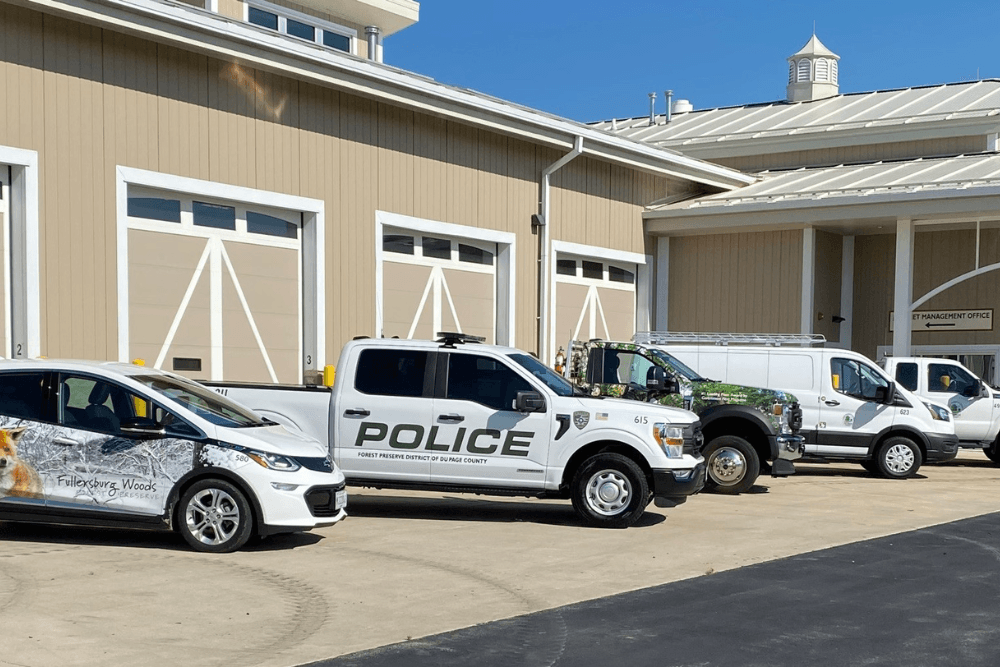
With more than 1,300 vehicles and equipment assets to manage, the Forest Preserve District of DuPage County has learned that there is no single solution for building a more sustainable fleet.
The District operates approximately 170 vehicles, with the remaining assets including a range of small equipment, mowers and other off-road equipment. Today, approximately 95% of its vehicles operate on an alternative fuel, including B20 biodiesel, LPG, CNG, E85, electric, and hybrid power.
The Forest Preserve District intentionally uses a diverse range of fuels for its equipment. It has found the key to successfully incorporating alternative fuels has been matching the technology to the job rather than trying to make one fuel work for every application.
How the Forest Preserve Began Building a More Sustainable Fleet
The District’s move toward alternative fuels began in 2002, when its Board of Commissioners approved an alternative fuel policy directing the forest preserve to purchase vehicles capable of using alternative fuels whenever possible.
It was also during this time that the forest preserve began exclusively using B20 biodiesel in its diesel-powered trucks and equipment. The decision made practical sense for a conservation agency, but it also provided an easy entry point into alternative fuels. B20 did not require special equipment or conversion kits, allowing the forest preserve to begin purchasing biodiesel for its fueling-site tanks without making major changes to its fleet.
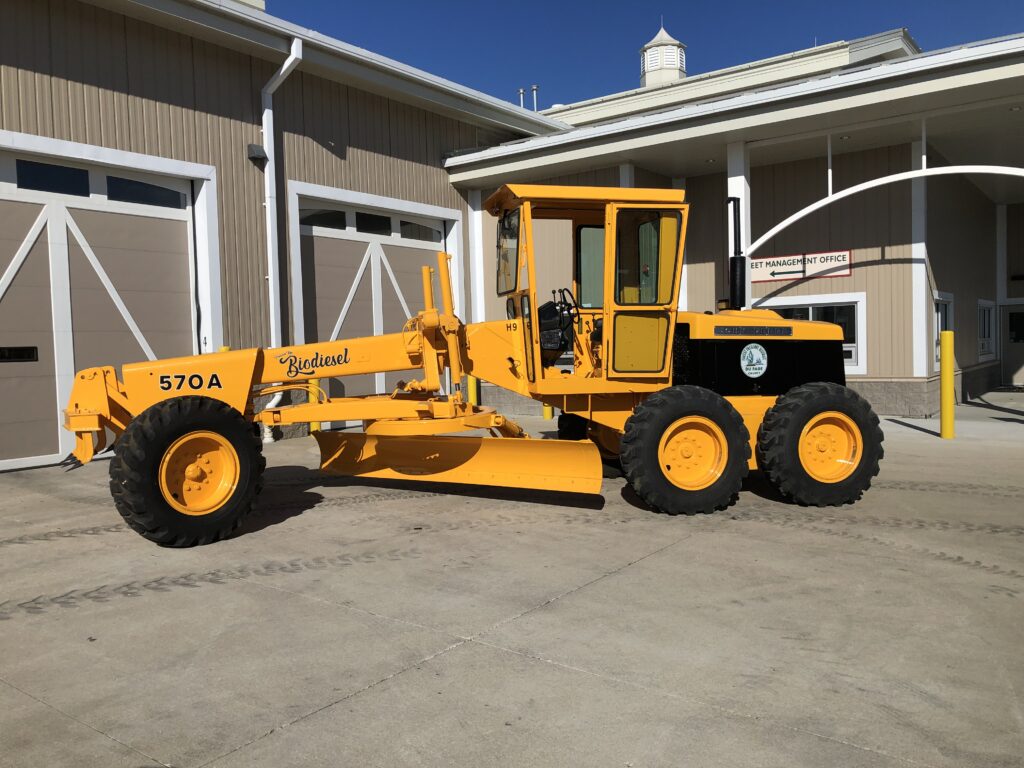
While there were some jitters about how the fuel would perform, particularly in older equipment, those concerns did not last long. For the forest preserve, B20 has continued to perform reliably throughout its fleet, including a 1979 John Deere grader that remains in use today.
The forest preserve eventually expanded its alternative fuel options beyond biodiesel, including LPG, E85, hybrid vehicles, electric vehicles, and CNG. Today, 39 vehicles use B20, along with more than 75 off-road diesel pieces of equipment. Another 61 vehicles use LPG, while 21 use E85, 28 are hybrids, six are electric, and six still use CNG.
Together, 161 of the District’s approximately 170 vehicles use an alternative fuel.
Finding the Right Fit: Overcoming CNG Challenges With LPG and Flexible Fuel Options
By 2003, the forest preserve had incorporated three CNG police Ford Crown Victorias into the fleet. However, there were some initial challenges.
Vehicles could take hours to fill up. Additionally, back in the early 2000s, the Forest Preserve District was one of the early fleets to test CNG as a fuel source, and it could be difficult to find parts for repairs, as CNG companies were going in and out of business. The fueling infrastructure was also expensive, and repair costs could be significant.
Though propane has been around for over a century as a viable and readily-available clean fuel source, the forest preserve had not incorporated it as abundantly into its fleet as present-day. With the issues it experienced using CNG, the district began looking more intently at increasing its use of LPG. Additionally, propane’s wide availability outside of the district interested it—propane is more largely available at retail stores, so if the forest preserve’s site went down, there was a greater opportunity for back up fueling.
The switch to LPG turned out to be pivotal in the Forest Preserve District of DuPage County’s strategy to incorporate more alternative fuel vehicles and equipment. One of the biggest steps in expanding its alternative fuel fleet was investing in LPG conversion kits for its pickup trucks and vans.
By using bi-fuel conversion kits, the forest preserve alleviated concerns about the reliability and range of LPG fueling stations, as the kits allow vehicles to operate on either liquid propane or gasoline. If a driver traveled outside the area and could not find LPG, the vehicle could switch to gasoline. If the LPG system required maintenance, the vehicle could continue operating on gasoline until repairs were completed.
Today, six CNG vehicles remain in the fleet, but some of the district’s older CNG systems are no longer certified and replacement parts are no longer available. As a result, the share of the fleet running on alternative fuels has declined slightly from a high of approximately 98% several years ago.
Another challenge the forest preserve has experienced is the continuous fluctuation of vehicle manufacturers and federal guidelines. For example, Ford has stopped producing its F-150 Lightning electric truck, which has given the forest preserve no viable work truck option, and there is reduced availability overall of hybrid engines and flex fuel E85.
Why a Multi-Fuel Fleet Strategy is Important: One Size Does Not Fit All
The district’s experience has reinforced the importance of having multiple fuel options.
“As our CNG experience has proved, we never want to have all our eggs in one basket,” said Michael Webster, Director of Field Operations for the forest preserve. “Some fuels work great for one application while others make more sense on another.”
Electric vehicles, for example, can be a good fit for pool vehicles or courier vans with limited daily driving. But with current vehicle capabilities, an EV may not make sense for a vehicle that needs to tow or carry heavy cargo.
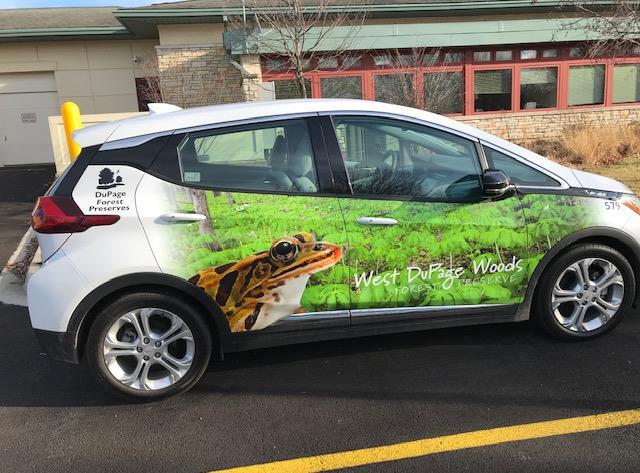
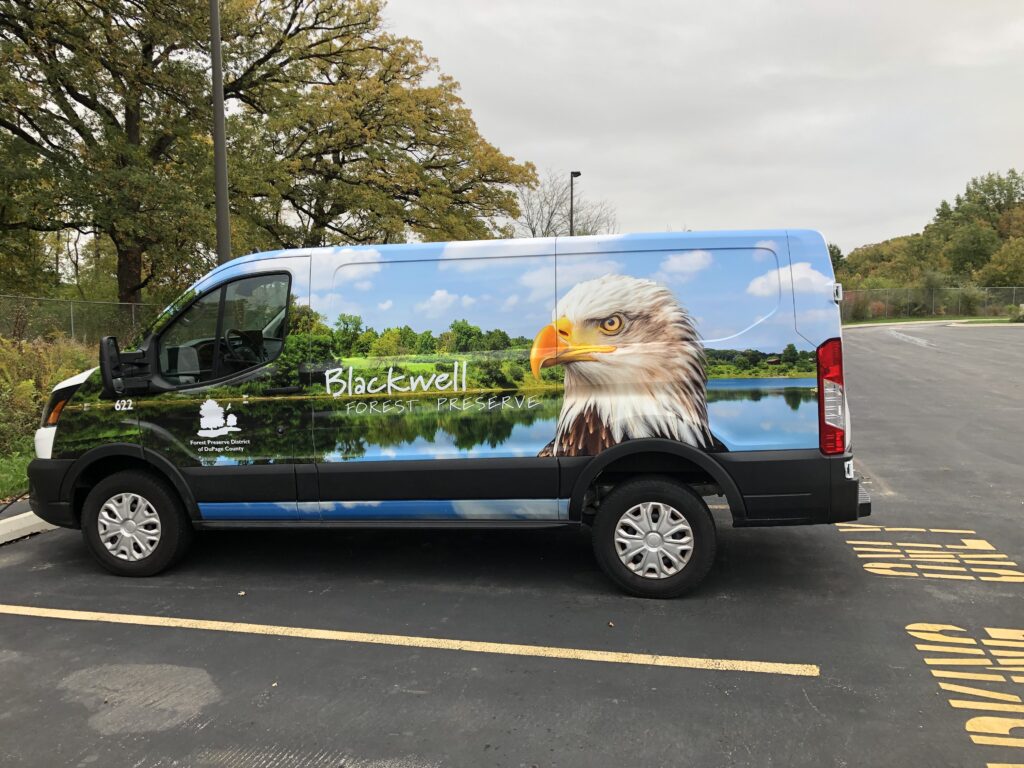
A multi-fuel fleet gives the forest preserve the ability to test new technologies and determine where they work best.
“As we experiment with new technologies, having a wider variety of fuel choices allows us to test the capabilities and application of the fuel on what our various departments’ need in a work truck. We can then expand or reduce that fuel from our fleet as needed,” said Webster.
Nationwide Recognition for Fleet Leadership
As a result of its commitment to alternative fuel vehicles and equipment in its fleet, the Forest Preserve District of DuPage County has earned national recognition.
It has been ranked among the 100 Best Fleets for 12 consecutive years and among the Top 50 Leading Fleets for 10 consecutive years. The forest preserve has also ranked among the top five in the Green Garage competition twice in recent years.
However, the awards recognize more than the forest preserve’s use of alternative fuels—it credits its fleet policies and programs, maintaining a newer and more efficient fleet of assets, and the construction of a new, state-of-the-art 29,000-square-foot energy-efficient fleet facility as additional factors in its success.
The success of the program is, in large part, due to its design around the needs of the end user.
“Our transition to alternative fuels was so successful because we took the approach that one size doesn’t fit all. We looked at the job needs of the departments individually and focused on providing the best fueling option to accomplish their goals,” said Webster. “A program needs to be seamless to the end users, from ease of fueling to reliability. Our bi-fuel option and using E85, LPG, EV, Hybrid, B20, and earlier use of CNG allowed us to provide the best choice for the various needs.”
How Fleets Can Begin Incorporating Alternative Fuels
For fleets that have not yet started incorporating alternative fuels, the Forest Preserve District of DuPage County recommends starting with the low-hanging fruit rather than trying to change everything at once; electric vehicles or biodiesel can provide relatively straightforward entry points.
B20 is particularly accessible for fleets that already operate diesel vehicles. More off-site fueling stations in Illinois now offer biodiesel, while fleets with their own fueling sites can add B20 to their diesel tanks without tank cleaning or major conversions.
Connecting with organizations that can help fleets understand the process has also been vital to the fleet’s success. Webster recommends that fleets interested in B20 reach out to the B20 Club of Illinois, which can help agencies evaluate their fueling equipment, test existing diesel for microbial growth, and identify vendors for sourcing B20.
“Starting a program is easy and can be low to no cost to get it rolling,” Webster said. “You just have to start.”