
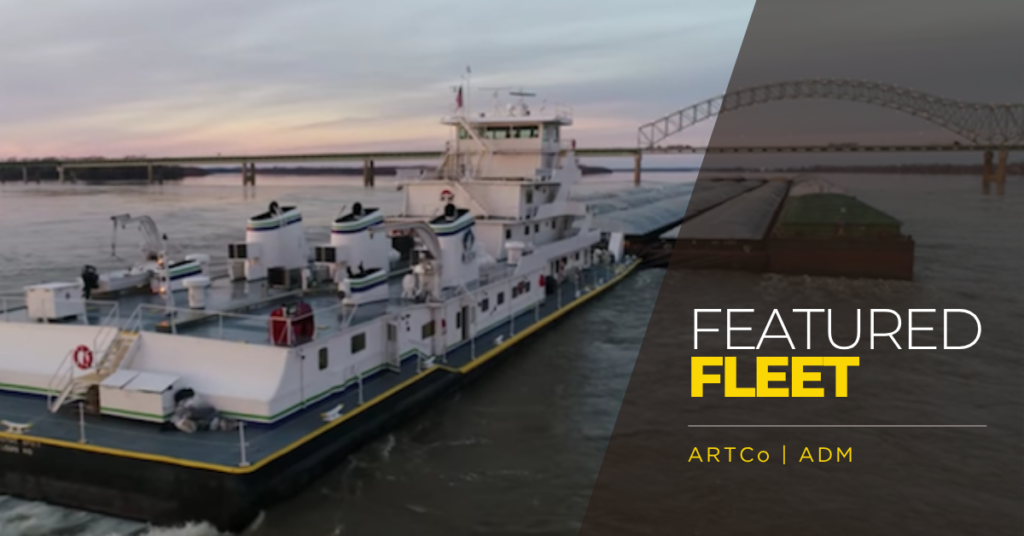
When Illinois fleets talk about “higher blends” of biodiesel, most conversations top out around B20, the threshold most engine warranties comfortably support and the level that earns a fleet entry into the B20 Club of Illinois. American River Transportation Company (ARTCo), a wholly owned subsidiary of Archer Daniels Midland (ADM), has spent the last two decades proving that biodiesel belongs in marine fuel tanks at all—and it’s now pushing well past that line.
ARTCo’s fleet of 29 line-haul boats has been running proof-of-concept B40+ biodiesel blends sourced out of St. Louis, year-round, according to Brandon Rick, Fleet & Sustainability Manager for ADM Trucking. That’s a meaningful jump from the B20–B30 blends ARTCo has run across its fleet for years—blends that already put the company in the B20 Club of Illinois and, on their own, deliver an estimated 42,265 tons of CO2-equivalent emissions reductions annually, alongside cuts in particulate matter, hydrocarbons, and carbon monoxide. To ARTCo’s knowledge, no other operator is currently burning any bio-blended fuel on the inland waterway system at all, which makes this a genuine first for the sector, not just a step up.
The biodiesel behind that first is a distinctly Midwestern product: soy-based fuel refined from soybeans grown by farmers across Illinois and the broader Midwest. That’s not a footnote—it means the emissions reductions happening on the river are backed by a supply chain that starts in the same fields ARTCo’s barges are hauling grain out of, a genuinely regional, farm-to-fuel-tank story.
Scaling Higher Biodiesel Blends Across Illinois’ Inland Waterway Supply Chain
The B40+ testing isn’t confined to a single state, but it isn’t disconnected from Illinois either. ARTCo’s line boats running these higher blends spend significant time on the Lower Mississippi, moving grain barges down to New Orleans for export before heading back north—corridor time that connects directly to the Illinois River system and the Midwest grain-to-export pipeline that Illinois shippers, elevators, and ports depend on. A boat that proves out B40+ reliability on the Lower Miss is a boat that can bring that experience upriver.
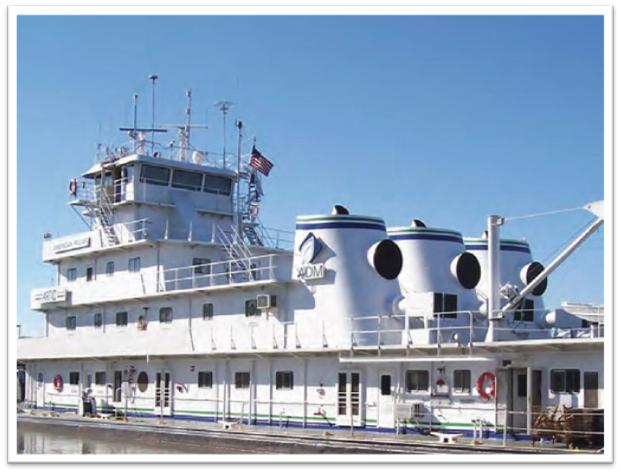
ARTCo isn’t stopping at proof-of-concept. The company is looking to grow its higher-blend footprint on the Lower Mississippi in 2027 with a floating fuel flat capable of delivering higher biofuel blends directly to its Lower Miss boats—infrastructure supported by a USDA Higher Blends Infrastructure Incentive Program (HBIIP) grant awarded in 2024. HBIIP was built precisely for this kind of investment: cost-shared grants that help fueling and distribution facilities, including marine terminals, install or retrofit the pumps, storage, and delivery infrastructure needed to move higher ethanol and biodiesel blends from proof-of-concept into everyday operations.
That infrastructure piece is the real unlock. ARTCo’s territory operations team has noted that the biggest barrier to higher blends on the water isn’t the engines — it’s the supply chain: shore-based blending, computerized blend control, flush cycles, and filter-change discipline to manage biodiesel’s detergent effect on piping. ARTCo built that capability in-house over 20 years of incremental repowering, starting with a single test vessel in 2003. A floating fuel flat purpose-built for higher blends is the next logical step in scaling that know-how to more of the fleet.
Higher Biodiesel Blends Could Connect Illinois Agriculture, Marine Freight, and Clean Fuel Growth
Rick’s framing is the one Illinois fleet managers should pay attention to: ARTCo’s B40+ work could prove out successful adoption of higher bio blends across the marine sector, if a major fuel retailer or wholesaler follows with a turnkey solution to blend biofuel into boat fuel at scale. Right now, ARTCo is largely building that capability itself. A commercial fuel supplier stepping in to offer higher-blend marine fuel as a standard product would be the signal that this moves from one fleet’s proof-of-concept to an available option for the rest of the industry—barge operators, harbor services, and ultimately the Illinois River system that feeds the Mississippi.
For a state that already leads the nation in biodiesel production and distribution, a credible high-blend marine use case is worth watching closely. It’s the same “match the fuel to the mission” logic IACT applies to trucking and equipment fleets, applied to a mode—inland marine—that gets far less attention in most clean-fuel conversations, despite moving a huge share of Illinois’s and the greater Midwest’s agricultural exports.
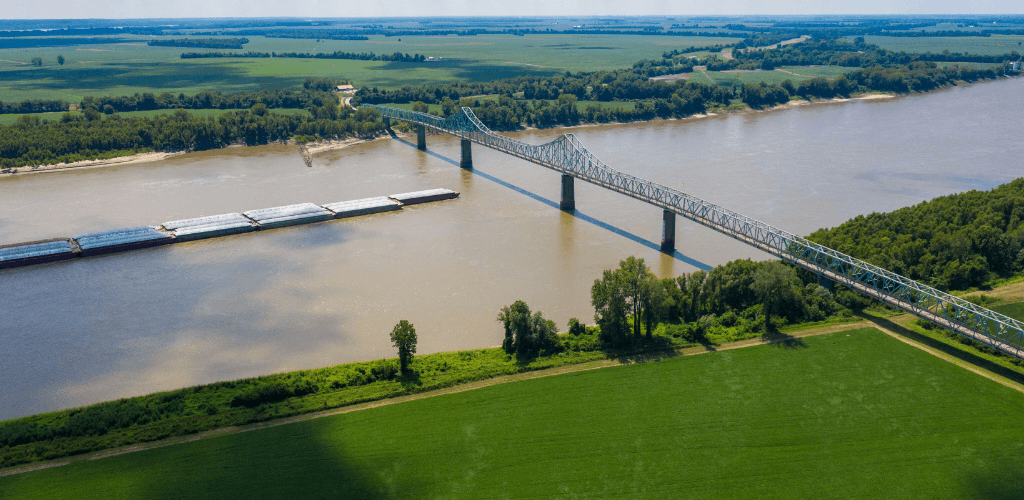
And that connection to Illinois and greater Midwest agriculture runs both directions. Nearly half of all U.S. corn and soybean exports move by barge down the Mississippi River system, and Illinois sends more freight to Louisiana by water than any other state on the river: 44 million tons in a recent year, with cereal grain and other ag products making up nearly 70 percent of that tonnage. That grain moves on line boats like ARTCo’s, down through the Lower Mississippi to Gulf terminals near New Orleans.
In other words, the fuel powering these boats is directly tied to the cost and carbon footprint of getting Illinois corn and soybeans to the world market. And, as noted above, that fuel is itself grown by the same Midwest farmers whose crops fill the barges. It’s about as close to a closed-loop, in-state clean-fuel story as this sector gets: hard-working Midwest farmers growing the soybeans that both fill the barges and fuel the boats that carry them to export. Higher blends succeeding on the water are good news for the ag economy, the waterways economy, and Illinois and Midwest biodiesel producers all at once.
See B40+ Marine Biodiesel at Fueling Illinois’ Freight Futures
This is exactly the kind of real-world, technology-neutral fuel story IACT wants at the center of its 2027 Fueling Illinois’ Freight Futures Summit, set for February 25 at Autobahn Country Club in Joliet. The agenda already compares liquid fuels, gaseous fuels, electricity, and hydrogen across freight use cases, and a marine-sector high-blend biodiesel case study would round that picture out with a mode Illinois freight conversations too often leave on the dock.
IACT has invited ARTCo and ADM to bring this work to the summit stage: to walk fleet operators, fuel providers, and agency partners through what it takes to move a fleet from B20 to B40+, what a floating fuel flat adds to the equation, and what a commercial-scale marine biodiesel market would need to look like. Marine freight rarely gets a seat at the table in fleet-fuel conversations dominated by trucking; a practitioner story like this one is exactly what would round out the agenda and give Illinois agriculture and waterways stakeholders a reason to be in the room.
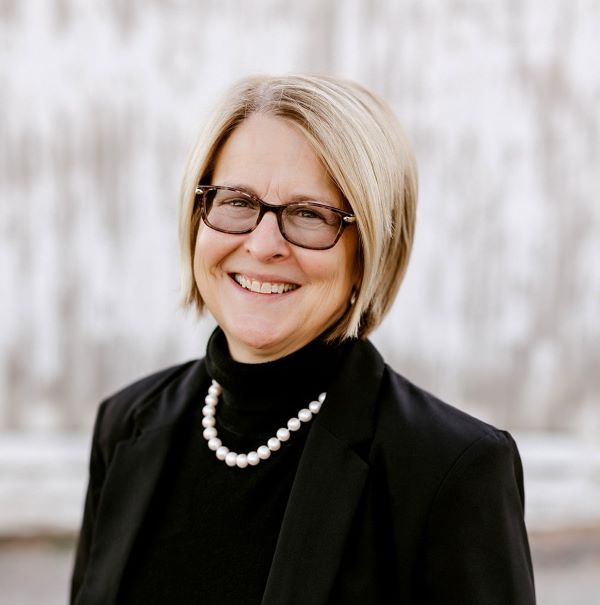
Dr. Ann Schneider became IACT’s chair in 2026, bringing 36 years of professional experience in public finance, public policy, and solutions development and 18 years of executive-level transportation policy experience to the role. Now a transportation policy consultant, Dr. Schneider has helped clients secure nearly $357 million in grant funding.