


As fleets continue exploring ways to reduce emissions while maintaining reliable operations, two renewable alternatives to petroleum diesel are receiving increased attention: biodiesel and renewable diesel. Although the fuels have similar names and can be produced from many of the same renewable feedstocks, they are distinct products with unique characteristics. Understanding these differences can help fleets make informed decisions about which fuel—or combination of fuels—best fits their operational needs.
Both biodiesel and renewable diesel are produced from renewable resources such as soybean oil, used cooking oil, animal fats, distillers corn oil, and other natural oils and fats. Compared to petroleum diesel, both fuels can significantly reduce lifecycle greenhouse gas emissions while supporting domestic energy production, strengthening U.S. energy security, creating new markets for American agricultural products, and reducing harmful tailpipe emissions that contribute to poor air quality.
The primary difference between the two fuels is how they are manufactured.
Biodiesel is produced through a process called transesterification, creating a renewable fuel known chemically as fatty acid methyl ester (FAME) that meets the ASTM D6751 specification. It is commonly blended with petroleum diesel at levels such as B5, B10, B20, or higher. Compared to petroleum diesel, biodiesel offers higher cetane and superior lubricity, helping promote cleaner combustion while reducing wear on fuel system components. Biodiesel has a long track record of successful use in commercial trucking, municipal, agricultural, marine, and transit applications across North America and is widely available at blends up to B20 at retail fueling stations throughout Illinois. Use of B100 (100% biodiesel) is also expanding through technologies such as the Vector System from Optimus Technologies, which enables diesel vehicles and equipment to operate on B100 year-round across a wide range of operating conditions.
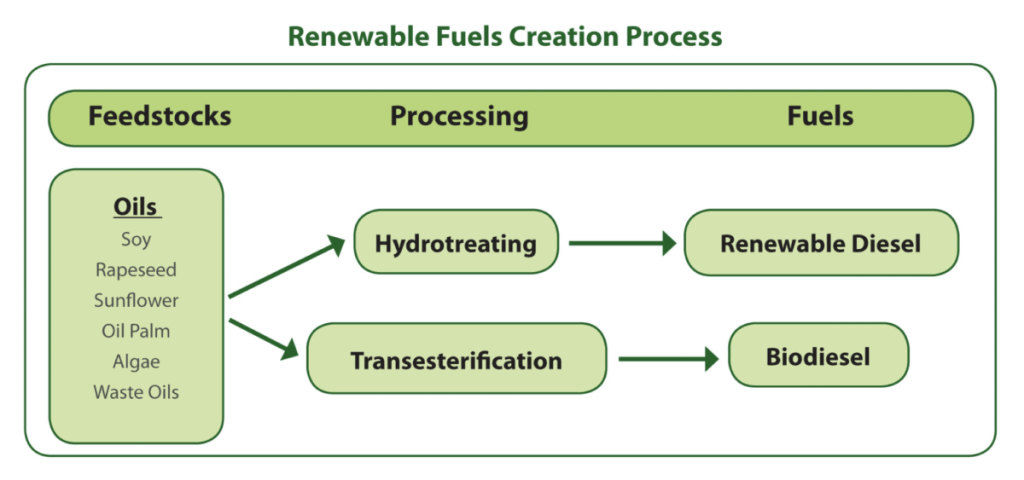
Renewable diesel is commonly produced through a hydrotreating process that results in a fuel that is chemically similar—but not identical—to petroleum diesel. Because of its chemical properties, renewable diesel meets the ASTM D975 specification for diesel fuel and is generally considered a “drop-in” fuel that can typically be used without modifications to existing diesel engines or fueling infrastructure. When appropriately isomerized, renewable diesel also offers excellent cold-weather performance and a high cetane number, contributing to improved combustion and winter operability.
Rather than viewing biodiesel and renewable diesel as competing fuels, fleets should recognize that they complement one another.
Biodiesel provides exceptional lubricity that helps reduce wear on fuel system components. It is also biodegradable, non-toxic, and among the lowest-carbon liquid transportation fuels commercially available. Renewable diesel offers excellent cold-weather performance and seamless compatibility with existing diesel engines and fueling infrastructure. When blended together, fleets can capitalize on the strengths of both fuels by enhancing lubricity, improving cold-weather operability, and further reducing lifecycle greenhouse gas emissions and tailpipe pollutants, particularly in legacy diesel equipment without advanced exhaust aftertreatment systems.
The availability of these fuels also differs across the country.

Renewable diesel production has grown rapidly over the past several years, but distribution remains largely concentrated in parts of the western United States and along portions of the East Coast. While availability continues to expand, renewable diesel is still not widely available throughout much of the Midwest. Depending on their location and fuel supplier, fleets interested in renewable diesel may find supplies limited and priced at a premium compared with petroleum diesel and biodiesel.
Biodiesel, on the other hand, is already well established throughout Illinois and the Midwest. Illinois is one of the nation’s leading biodiesel-producing states and has an extensive distribution network that allows fleets across the state to access biodiesel blends ranging from B5 to B100. This strong regional infrastructure has helped thousands of fleets successfully incorporate biodiesel into their operations while supporting Illinois farmers, local businesses, and domestic manufacturing.
As clean transportation continues to evolve, no single solution will meet the needs of every fleet. Biodiesel and renewable diesel each provide meaningful environmental, air quality, and operational benefits—and together offer flexible, practical pathways for reducing emissions from existing diesel vehicles and equipment. Transitioning to these fuels can help fleets meet sustainability goals while supporting economic development, improving public health, strengthening domestic energy security, and advancing America’s renewable energy future.
Whether a fleet chooses biodiesel, renewable diesel, or a blend of the two, renewable alternatives to petroleum diesel remain among the most practical and immediately available tools for reducing emissions from diesel-powered vehicles and equipment.
If you’d like to learn more about transitioning to biodiesel or renewable diesel, the B20 Club of Illinois is here to help. Contact us at CleanAir@Lung.org.

Bailey Arnold was elected to the board in 2025 and is Director of Healthy Air Solutions for the American Lung Association in Illinois. Since joining the organization in 2015, he has led grant-funded initiatives advancing low-carbon transportation, biobased products, and green building practices. He also serves as Program Director for the B20 Club of Illinois, B20 Club of Indiana, and Biobased Academy.