

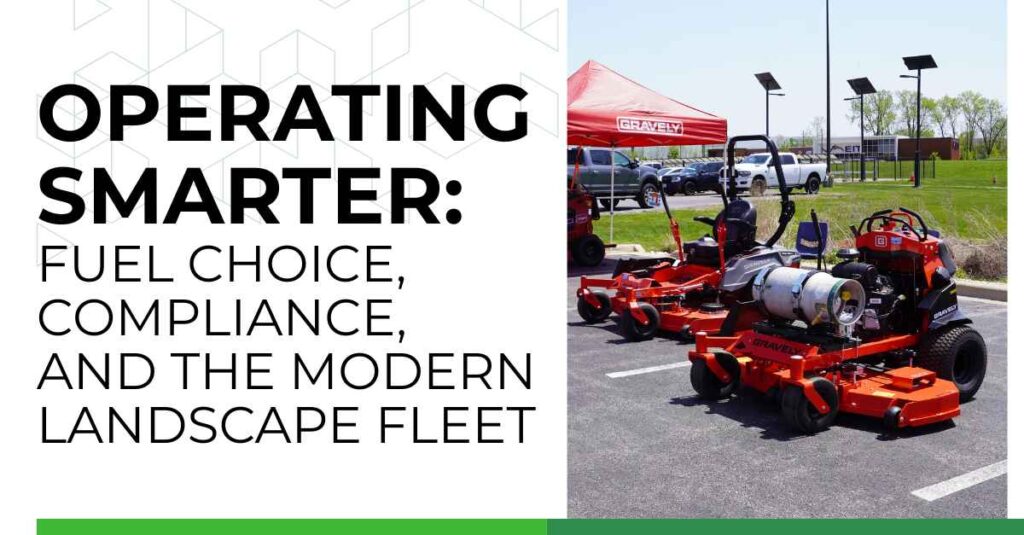
For grounds-care operators and the fleets that serve them, fuel choice has shifted from an environmental conversation to an operating one, driven by fuel cost volatility, evolving small-engine rules, and procurement language showing up in city and campus contracts.
Two forces are reshaping how landscape fleets evaluate equipment, and neither is primarily about advocacy. The first is regulatory drift: federal authorization of California’s amended Small Off-Road Engine (SORE) rules sets a national reference point for what manufacturers will build next, and states and municipalities are watching closely. California Air Resources Board’s (CARB) standards effectively move new equipment toward zero-emission designs in two phases beginning with model year 2024, with a second phase in 2028. The rules apply to manufacturers—not to operators using existing equipment—but they signal where the supply chain is heading.
The second is procurement language. Municipalities from Stamford, Connecticut, to Portland, Oregon, have written equipment-class restrictions and phase-outs into local code . Even where there is no ban, RFP and bid documents increasingly ask landscape contractors to disclose fleet composition, fuel type, and noise levels. The competitive question for operators is no longer whether change is coming, but how to position a fleet to bid into it.
Framed this way, alternative fuels are an operating-cost and compliance lever, alongside traditional gasoline and diesel—not a referendum on any one energy source. Propane, electric, and conventional liquid fuels each carry trade-offs in capital cost, refueling logistics, productivity per shift, maintenance cycles, and bid eligibility. The job of a fleet manager is to model those trade-offs honestly against the contracts the business intends to pursue.
Propane: A Middle Path with Established Logistics for Mowers and Equipment
Propane mowers and equipment occupy a useful middle ground for operators who need conventional duty cycles and same-day refueling but want a measurable reduction in per-hour fuel cost and tailpipe output. Recent retail pricing referenced by equipment manufacturers shows propane meaningfully below gasoline on a per-gallon basis, with diesel above both, though local pricing, contract delivery terms, and seasonal volatility all matter and should be modeled with a propane supplier directly.
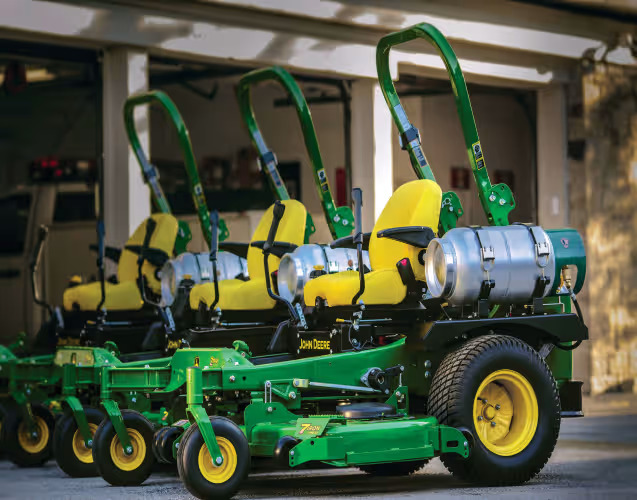
Operational advantages frequently cited by fleets using propane mowers and equipment:
- Closed-loop refueling with cylinder exchange reduces spillage, theft, and on-site fuel storage exposure
- Cleaner-burning combustion is associated with longer oil-change intervals and lower carbon buildup on plugs and valves, per manufacturer guidance
- Federal incentives remain available through the PERC Propane Mower Incentive Program, up to $1,000 per qualifying new mower and $500 per qualifying conversion, subject to program funding and data-sharing requirements.
- State-level programs layer on top: the Missouri Lawn Equipment Assistance Fund (LEAF), for example, is running through June 30, 2026, for dedicated propane walk-behind and zero-turn mowers.
- PERC also offers a 10-day Propane Landscape Demonstration Program that lets crews trial equipment on their own routes before committing capital.
Honest trade-offs of adopting propane mowers and equipment: :
- Cylinder logistics require a relationship with a propane supplier and a plan for storage compliance
- Conversion equipment must be EPA– and (where applicable) CARB-certified to qualify for incentives
- Resale market for used propane mowers is thinner than for gasoline equivalents in some regions.
Battery-Electric Landscaping Equipment: Lower Per-Hour Operating Cost, Different Logistics
Commercial-grade battery-electric mowers, blowers, and trimmers have moved from “early adopter” status into mainstream fleet evaluation. Independent and manufacturer calculators show that the per-hour fuel-and-maintenance gap can recover a sizable capital premium inside a single mowing season under favorable assumptions: Mean Green publishes an illustrative ROI on the order of six to seven months at its assumed inputs. Real fleets will see numbers above or below that depending on duty cycle, electricity rates, and equipment mix; the calculator inputs deserve scrutiny, but the directional case is real.
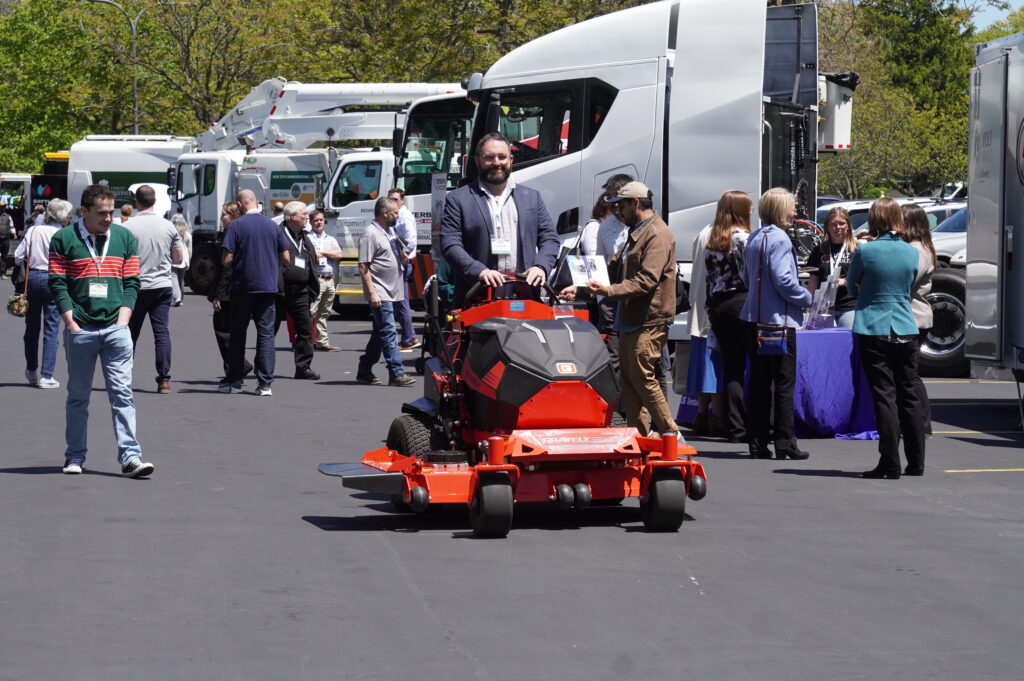
Operational advantages of battery-electric landscaping equipment frequently cited by fleets:
- Per-hour fuel cost is typically a fraction of gasoline equivalents at current commercial electricity rates
- Fewer wear parts—no spark plugs, filters, or oil changes—translate into reduced shop time and parts inventory
- Lower noise output broadens the working day in residential, hospital, school-zone, and HOA contracts where time-of-day restrictions apply
- Eligibility for an expanding set of municipal and utility rebate programs, including residential pass-through rebates that landscape contractors can leverage in customer conversations
Honest trade-offs of battery-electric landscaping equipment:
- Battery duty cycle and swap inventory must be planned per crew and per route —a one-for-one mower swap usually requires two or three battery packs
- Charging infrastructure (shop power, possibly a service upgrade) is a capital line item that should be priced into the comparison
- Cold-weather performance and battery longevity vary across manufacturers; warranty terms become an important differentiator
Winning Municipal Contracts: The Cleaner Landscaping Equipment Marketing Angle
Equipment manufacturers, fuel suppliers, and a growing number of trade publications have noticed that “cleaner” equipment carries a competitive marketing story independent of environmental framing, and they are coaching landscape contractors to lead with the operating and professional-image benefits when bidding on municipal, campus, and institutional work.
The pitch for “cleaner” landscaping equipment, distilled:
- Lower bid price, not just lower emissions: Reduced fuel and maintenance costs allow contractors to sharpen their per-acre or per-property bid without eroding margin. That math is the most persuasive line item in a procurement scorecard
- Time-of-day flexibility: Quieter equipment expands the workable window in noise-restricted zones, increasing crew productivity per shift and letting contractors take on properties (schools, hospitals, senior living) that simply close the door on gasoline blowers during the day
- Procurement-ready paperwork: Municipal RFPs increasingly request fleet inventories, fuel-type disclosures, decibel certifications, and equipment-age documentation. Contractors who maintain this paperwork as a matter of course move through procurement faster and lose fewer bids on technicalities. DC’s environmental specification guidance for landscaping services is a representative example of the documentation municipalities expect
- Future-proofing against local code: In jurisdictions like Stamford, gasoline leaf blower use is being phased out on defined compliance periods, with a separate immediate ban on municipal procurement of new gas-powered equipment. Contractors who already operate compliant fleets do not need a hardship extension, do not need to retrain mid-contract, and do not have to absorb a fleet transition cost during the contract term
- Professional image and tenant relations: Property managers, university grounds directors, and HOAs report fewer noise complaints with electric and propane equipment, a soft benefit that shows up in renewal rates, referrals, and Yelp/Google reviews. For contractors competing on reputation as much as price, that matters
Translating this into a bid narrative is straightforward. The cover letter or executive summary can be reframed from “we run sustainable equipment” to “our fleet composition reduces operating cost, eliminates noise complaints, meets your procurement specifications today, and removes risk of mid-contract compliance changes.” The substance is the same. The audience hears it differently.
Questions to Ask the Landscaping Equipment Dealer or Supplier
Adapt these to a one-page checklist your team can carry into demos, RFP debriefs, and supplier negotiations. They draw from EPA fleet-procurement guidance and standard fleet due-diligence practice.
1. Total Cost of Ownership
- What is the realistic fuel-or-electricity cost per operating hour for this equipment on a route comparable to ours?
- What are the scheduled maintenance intervals, and what does a typical year of parts and labor cost?
- What is the manufacturer’s expected service life in operating hours, and what is the resale market?
- Will you provide a written side-by-side TCO model against the gasoline or diesel equivalent we are replacing?
2. Warranty and Reliability
- What is the warranty term on the engine or motor, the battery pack, and the chassis — and are they the same?
- Is the battery warranty calendar-based, cycle-based, or capacity-based (e.g., 70% of original capacity at year five)?
- What is excluded? Commercial-duty use? Temperature extremes? Aftermarket attachments?
- What is the documented mean time between failures on units in your service area?
3. Fuel and Energy Logistics
- For propane: who supplies cylinders, what is the delivery cadence, and what does the cylinder exchange contract look like?
- For propane: are conversion systems EPA- and CARB-certified, and do they qualify for the PERC incentive program?
- For electric: what charging infrastructure is required, and do you provide a site assessment?
- For electric: how many battery packs do you recommend per machine for a full shift, and what is the swap workflow?
- What is the runtime per fill or per charge under realistic load — not under best-case demo conditions?
4. Service and Parts
- Where is the nearest authorized service center, and what is the turnaround on a major repair?
- Do you stock loaner units while a machine is in for service?
- What is the lead time on common wear parts and on a replacement battery pack?
- Are your technicians factory-certified, and can our shop be trained for in-house service?
5. Incentives, Rebates, and Compliance
- Which federal, state, utility, and local incentives is this equipment eligible for, and will you help us file?
- Does the unit meet the equipment specifications written into the RFPs we intend to bid on?
- Can you provide a fleet-composition summary letter we can submit with bid documents?
- What documentation do you provide for noise output, emissions, and CARB/EPA certification?
6. Safety and Operator Training
- Is operator training included? Refresher training? Spanish-language materials?
- For propane: who trains crew members on cylinder handling and on-site refueling per state requirements?
- For electric: what is the lockout-tagout and battery-handling protocol, and do you provide written SOPs?
7. The Pilot Question
- Before we commit to a fleet purchase, can we run a paid or program-supported demo on a real route for at least one full mowing cycle?
- Will you collect performance data alongside us and share the results in writing?
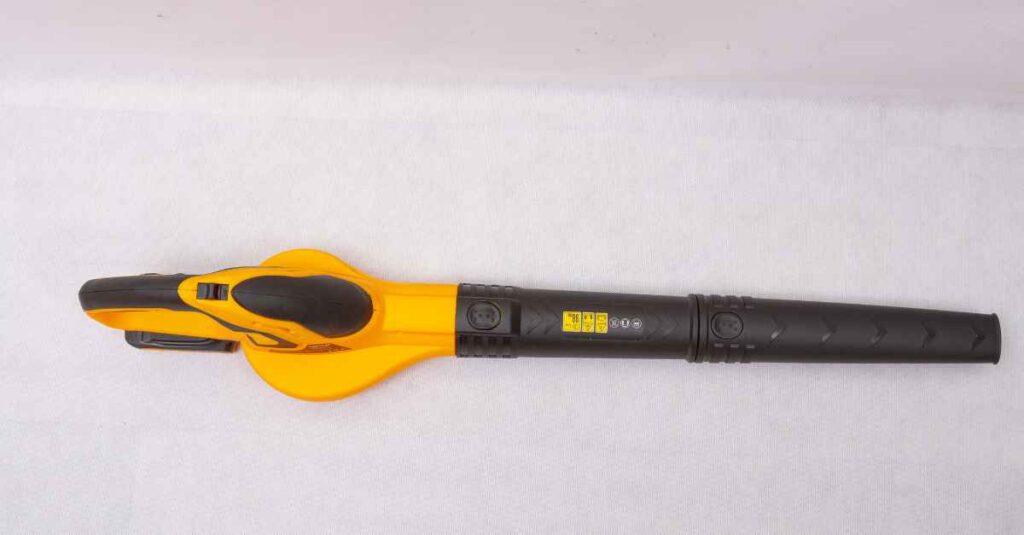
The Bottom Line for IACT Members
The cleanest framing of this conversation—and, in our view, the most honest—is that landscape and grounds-care fleets are being asked the same questions every other transportation fleet is being asked: what does it cost to operate, what does it cost to comply, and what does it cost to win the next contract? Propane and battery-electric equipment are answers to those questions in a growing share of cases. Conventional gasoline and diesel remain answers in others. The work for operators is to model the comparison on their own routes, with their own contracts in mind, and to ask suppliers the questions that surface real numbers rather than marketing claims.
IACT will continue to track procurement language, incentive programs, and equipment-certification developments relevant to Illinois operators, and to publish practitioner-level analysis through Greenline, our newsletter. Reader questions and field reports are welcome.

Dr. Ann Schneider became IACT’s chair in 2026, bringing 36 years of professional experience in public finance, public policy, and solutions development and 18 years of executive-level transportation policy experience to the role. Now a transportation policy consultant, Dr. Schneider has helped clients secure nearly $357 million in grant funding.