
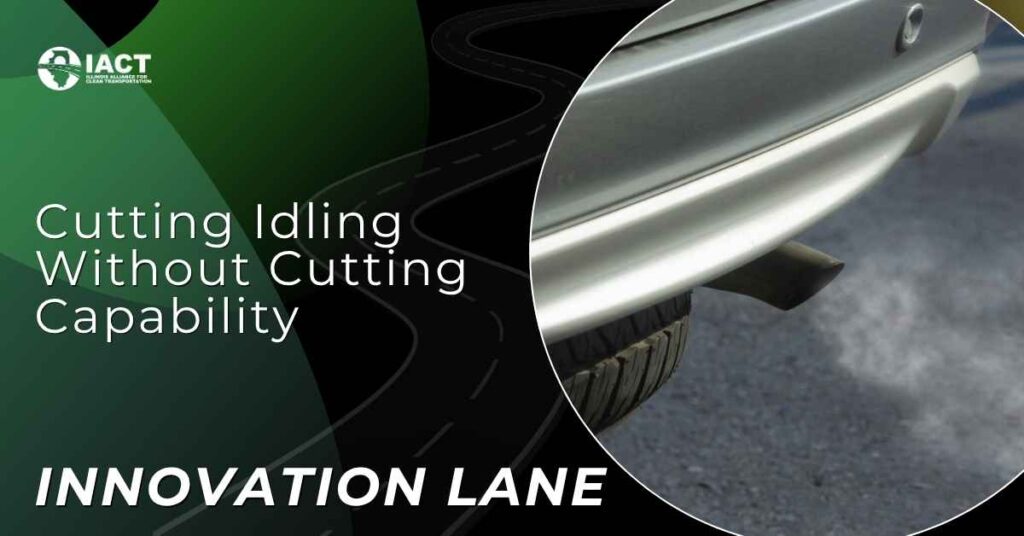
Idle reduction is no longer just a driver behavior issue. For fleets across Classes 1 through 8, it is now a practical technology strategy for reducing fuel use, emissions, noise, and engine wear while still delivering the heat, cooling, and onboard power that vehicles need when parked.
Argonne National Laboratory’s March 2026 matrix, Idle Reduction Technology Solutions for Class 1–8 Vehicles, shows how broad that technology landscape has become. The resource focuses on aftermarket equipment that can be installed on existing vehicles and trailers, making it especially useful for fleets that want near-term operational gains without waiting for full vehicle replacement.
Beyond “No Idling”
The central problem with idling is simple: many vehicles still need services when the engine is off. Drivers need cab comfort, refrigerated loads need temperature control, and vocational trucks often need power for tools, hydraulics, or specialty equipment.
Argonne groups today’s solutions into four practical buckets: idle management controls, heat/cooling and auxiliary power units (APUs), work-site electrification and power take-off (PTO), and cargo refrigeration or shorepower connections. That structure is useful because fleets can match the technology to the operational need rather than treating idle reduction as a one-size-fits-all issue.
A Larger Retrofit Market
The matrix makes clear that the market now extends well beyond long-haul sleeper tractors. It includes light-duty, medium-duty, heavy-duty, and trailer applications, with offerings that range from battery-electric idle management systems to fuel-fired APUs and electric standby power for refrigerated trailers.
For light- and medium-duty fleets, controls-based systems can reduce idle RPM or cycle the engine on and off to maintain battery state of charge and basic comfort needs. For heavy-duty applications, fleets can choose from a deeper bench of battery-electric, fuel-based, and hybrid APU systems designed for day cabs, sleeper cabs, and specialty uses.
Where Innovation Is Moving
One of the strongest signals in the Argonne matrix is the growing role of battery-electric solutions. Many products now support engine-off heating, cooling, hotel loads, or stored energy for specialty equipment, and several also offer solar or grid-power compatibility.
That trend matters because it points to a practical bridge between conventional fleet operations and broader transportation electrification. A fleet does not have to jump directly to full vehicle electrification to gain experience with batteries, shorepower, electric accessories, and power management.
Vocational and Refrigerated Uses
The matrix is also notable for highlighting segments that are often overlooked in general anti-idling discussions. Work-truck applications such as bucket trucks, mobile cranes, refuse trucks, dump trucks, and utility vehicles can use electrified PTO and job-site power systems to operate equipment with the main engine off.
Likewise, refrigerated trailers and food-service applications have access to shorepower and standby electric options that reduce dependence on engine-driven operation while vehicles are stationary. For fleets working in neighborhoods, loading docks, schools, warehouses, or overnight locations, the noise and local air-quality benefits can be as important as the fuel savings. And reduced noise means a safer environment for workers who need to communicate with each other.
SmartWay and Fleet Decision-Making
Argonne also identifies which products include at least one EPA SmartWay-verified technology. That is an important signal for heavy-duty and school bus fleets because SmartWay verification is tied to technologies proven to save fuel and reduce emissions for long-haul trucks and school buses, although the program does not fully cover the light- and medium-duty market. Additionally, funding opportunities for the installation of idle reduction equipment have often required that the proposed equipment be SmartWay verified.
The broader takeaway is that idle reduction has matured into a real equipment category, not just an operational best practice. For fleets evaluating cost control, compliance, driver comfort, and emissions reduction all at once, Argonne’s matrix offers a timely roadmap for choosing the right solution for the right duty cycle.
What This Means for Illinois Fleets
For fleets in Illinois and across the Midwest, this resource arrives at a pivotal moment, as anti-idling ordinances tighten, corporate ESG commitments expand, and interest in low- and zero-emission operations continues to grow. At the same time, fuel price volatility is increasing operational risk, making idle reduction technologies and practices an increasingly important cost-control strategy. The matrix enables fleet managers to quickly identify appropriate solutions by vehicle class and operational need, whether prioritizing passenger comfort on school buses, hotel loads for sleeper cabs, utility functions for bucket trucks, or temperature control for refrigerated trailers serving distribution hubs and food deserts.
The North American Council for Freight Efficiency’s (NACFE) updated Idle-Reduction Playbook reinforces the same message Argonne’s matrix sends: successful programs blend driver engagement, clear policies, and the right mix of technologies tailored to each duty cycle. For fleets not yet ready to electrify everything, idle-reduction technologies represent a practical “Innovation Lane” step that saves fuel now while building experience with batteries, power electronics, and wayside power that will support deeper decarbonization in the years ahead.
Access the Argonne idle reduction matrix.
Portions of this article were drafted with the assistance of Perplexity AI and subsequently reviewed and edited by the author.

Dr. Ann Schneider became IACT’s chair in 2026, bringing 36 years of professional experience in public finance, public policy, and solutions development and 18 years of executive-level transportation policy experience to the role. Now a transportation policy consultant, Dr. Schneider has helped clients secure nearly $357 million in grant funding.